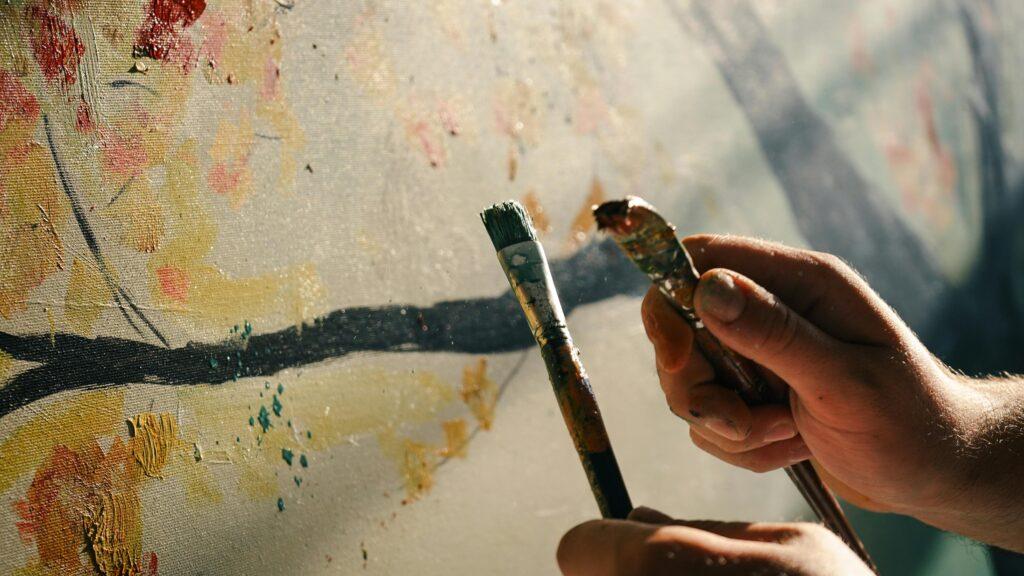


Watercolor and acrylic are two of the most commonly used painting mediums, especially for beginners. While both are accessible, they offer very different creative experiences in terms of technique, control, and expression. Understanding their differences can help artists choose a medium that best suits their personality and creative goals.
Watercolor: Transparency and Flow
Watercolor is known for its transparency and fluidity. When mixed with water, the paint flows naturally across the paper, creating soft transitions and unpredictable effects.
- Key Characteristics: Emphasizes layering, timing, and the use of white space.
- Technique Challenge: Artists often need to plan ahead, while also learning to embrace the beauty of imperfection and spontaneity.
- Best for: Those who enjoy a gentle, slower-paced process and appreciate subtle details.
Acrylic: Boldness and Versatility
Acrylic, on the other hand, is bold and versatile. It has strong color saturation, dries quickly, and offers excellent coverage.
- Key Advantage: Mistakes can easily be painted over, making acrylic a confidence-building medium for beginners.
- Application Range: It can be applied thinly like watercolor or thickly for textured effects, allowing for expressive and experimental approaches.
- Best for: Artists who enjoy fast results, vibrant colors, and the freedom to revise their work.
The Beginner’s Choice: Start Creating!
For beginners, there is no need to worry about choosing the “right” medium from the start. Instead, focus on understanding the key differences to see which creative experience naturally appeals to you.